
1. Fresh and mild
Start with fresh cheeses. Verde and Alvarinho tend to work well with fresh cheeses.
Order of flavor, texture, region, and service to assemble a Portuguese cheese board with sensible pairing.
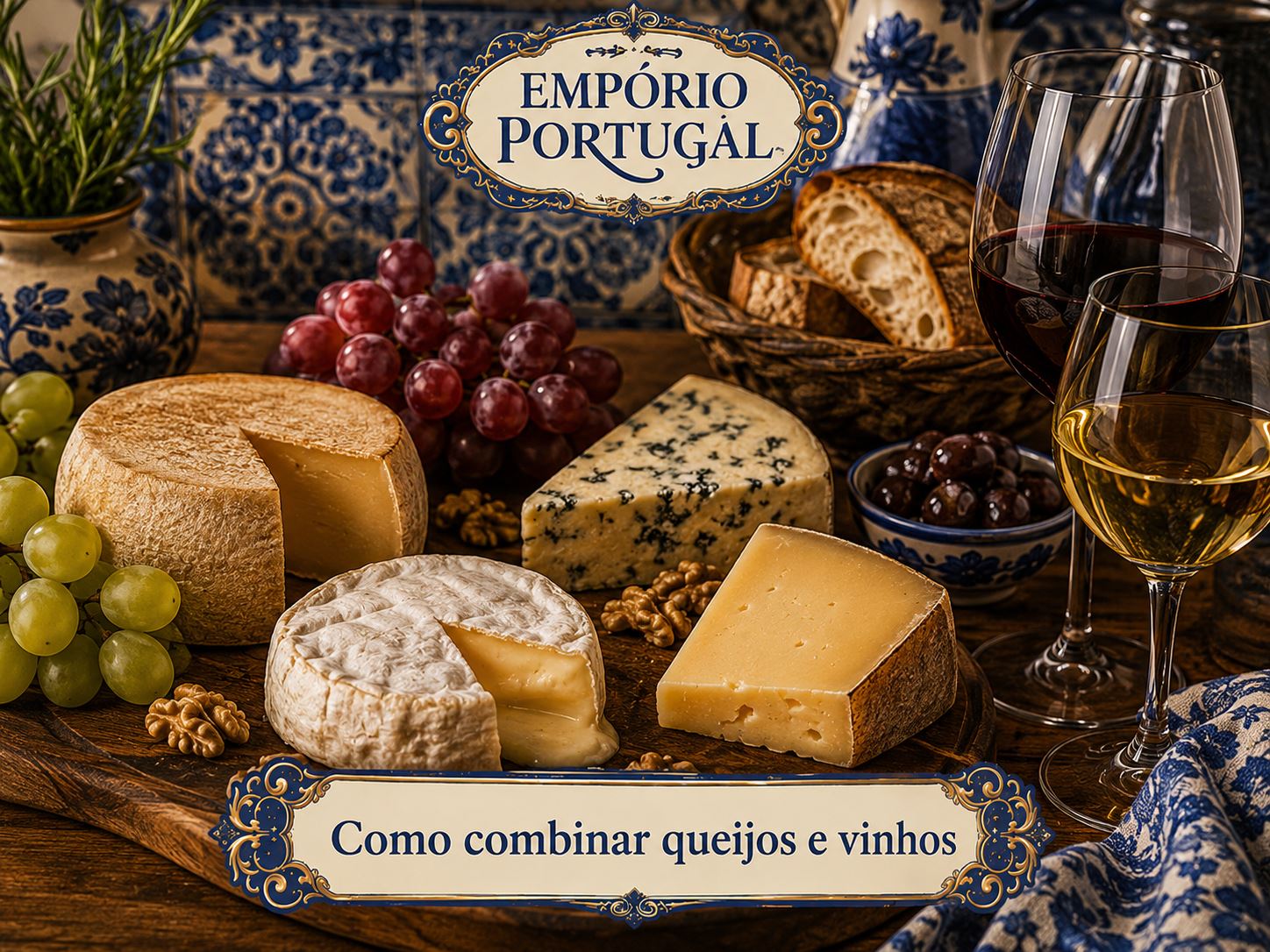
Pairing is not a fixed rule. Texture, salt, fat, and intensity are more useful guides.
Queijo da Serra, Azeitão, Serpa, Terrincho, and other Portuguese cheeses show how milk, aging, and region change the experience.
Essential in 30 seconds: take cheeses out of the cold, arrange from mild to intense, use bread and water to cleanse the palate.
Organize from the mildest to the most intense — start with fresh cheeses and move to intense aged ones.
Take the cheeses out of the refrigerator about 30 minutes before to release aroma and texture.
Texture, salt, fat, and intensity are practical guides — not absolute laws.
Whites help fresh and semi-aged cheeses. Medium reds pair with aged cheeses.
Plain bread and dried fruits cleanse the palate between cheeses. Water should be available on the table.
Milk, aging, and region change the experience — each Portuguese cheese tells a different profile.
Start with mild cheeses with light whites; move on to aged cheeses with medium-bodied reds or dessert wines in small doses.
Start with fresh cheeses. Verde and Alvarinho tend to work well with fresh cheeses.
Move on to semi-aged cheeses. Light whites also help in this profile.
Finish with intense aged cheeses. Light or medium-bodied reds can accompany.
Dessert wines and Port in small doses. Blue cheese pairs with Port, always in a small portion.
Jams, nuts, and marmalade can create bridges, but should not overpower the flavor of the cheese. Marmalade balances salty cheeses.
Assemble a few well-chosen cheeses. Three to five options are enough for an elegant board.
Portuguese reference mentioned in this guide — milk, aging, and region change the experience.
Mentioned among the Portuguese cheeses that illustrate the diversity of profiles.
Mentioned in this guide as an example of a Portuguese cheese with its own profile.
Mentioned in this guide among the reference Portuguese cheeses.
Pairs with Port, always in a small portion.
Pairing is not a fixed rule — the combinations below are practical guides based on the content of this guide.
Tend to work better with light whites. Verde and Alvarinho with fresh cheeses; many fresh cheeses work better with whites than with reds.
Medium or light reds can accompany. Avoid aggressive reds with delicate cheese.
Can balance with Port in small doses.
Finish with aged cheeses and small doses of sweet or dessert wine.
The best board is one where each cheese can still be perceived.
Take the cheeses out of the cold about 30 minutes before.
Three to five cheeses are enough for a home table.
Organize from the mildest to the most intense.
Serve neutral bread, dried fruit, and water.
Start with light whites or reds; Port in small doses.
Use a separate knife for very strong cheeses.
Serve small portions and keep water available.
Iced teas, sparkling water, and lightly sweet juices can accompany.
Three to five are sufficient for a home table.
No. Many fresh cheeses work better with whites.
Yes. Iced teas, sparkling water, and lightly sweet juices can accompany.
Content about alcoholic beverages intended for those over 18. Drink in moderation, serve water, respect individual restrictions, and offer non-alcoholic alternatives.
Adjust ingredients and techniques according to allergies, dietary restrictions, proper storage, and professional guidance when necessary.
This guide is part of the editorial curation of Empório Portugal. Service practices, pairing, and cooking may vary according to region, family, available product, and cultural context.
Do you have a recipe, family memory, or combination that works in your home? Send it to the Empório Portugal community.
Share Empório Portugal with someone who enjoys Portuguese gastronomy and culture.