
Portuguese Canned Goods
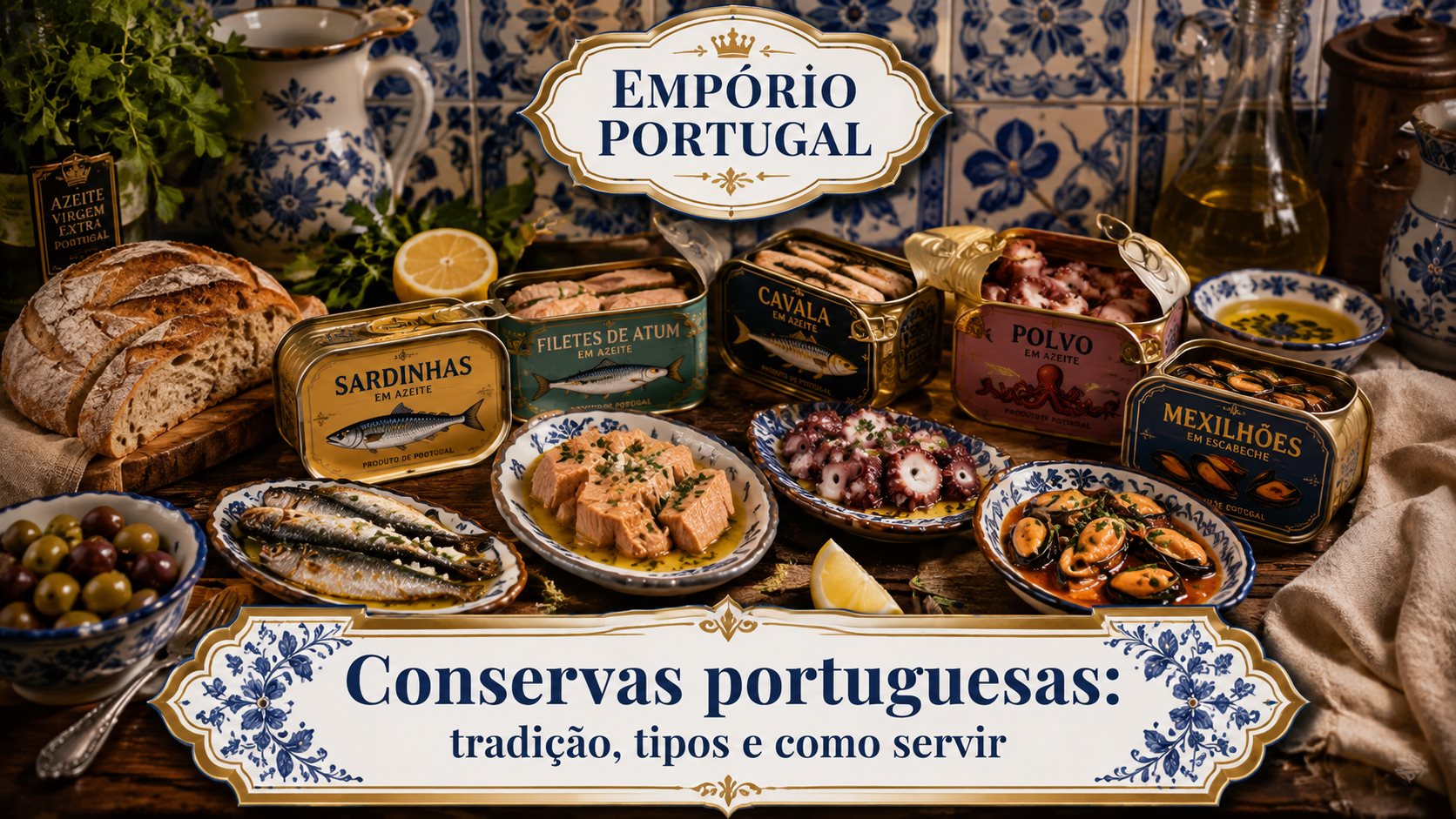
Portuguese Canned Goods: Tradition, Types, and How to Serve
Discover sardines, tuna, mackerel, octopus, mussels, and other Portuguese canned goods, with guidance on how to choose, open, serve, pair, and preserve.
Start here
Start with the fish, the sauce, and the label
Portuguese canned goods vary by species, cut, sauce, seasonings, production method, and origin. The best choice depends on the occasion and how it will be served.
Type of fish
Sardine, tuna, mackerel, octopus, mussel, and other products have different textures and flavors.
Type of covering
Olive oil, oil, tomato sauce, escabeche, water, or seasonings change the experience.
Cut and presentation
The product can appear whole, in fillets, pieces, or special preparations.
Intensity
Fatty, smoked, spicy, or seasoned fish can have a more pronounced flavor.
Integrity of the can
The packaging should be clean, without bulging, leaking, deep rust, or significant damage.
Main types
Main Portuguese canned goods
Each canned good has its own flavor profile, texture, and service. Use this selection as a starting point and always check the label of the actual product.
Sardines
Classic Portuguese canned good, with a strong flavor and juicy texture, presented in olive oil, tomato, spicy, or other sauces.
Serve: with bread, potatoes, salad, onion, herbs, or snacks.Tuna
Versatile profile, available in different cuts and coverings.
Serve: salads, sandwiches, appetizers, pasta, rice, and cold dishes.Mackerel
Fish with a more intense flavor and firm texture.
Serve: with rustic bread, vegetables, salads, onion, and acidic sauces.Octopus
Can appear in pieces or seasoned preparations, with variable texture and sauce.
Serve: snacks, salads, breads, and small appetizers.Mussels
Canned mollusks that can be presented in escabeche, sauce, or seasoned covering.
Serve: snacks, bread, salads, and appetizers.Bacalhau or other fish
Some lines include bacalhau, horse mackerel, eel, or other fish, depending on the producer and region.
Serve: check the label and adapt to the sauce and texture.Roe and specialties
Products with a more specific and intense profile, suitable for small portions.
Pâtés and preparations
Processed canned goods for spreading or serving as an appetizer, with various ingredients.
Names, species, sauces, cuts, and ingredients vary by producer. The label of the actual product should prevail.
Types of covering
The sauce changes the profile of the canned good
In olive oil
Rich and versatile profile for bread, salads, potatoes, and finishing touches.
In tomato sauce
Richer flavor suitable for snacks, pasta, and hot dishes.
In escabeche
Acidity, spices, and seasonings can balance fish and mollusks.
Spicy
Suitable for those seeking intensity, always considering the other accompaniments.
Natural or in water
More neutral profile for salads, sandwiches, and preparations where other seasonings will be added.
Smoked or seasoned
Products with a strong flavor should be served in balanced portions.
The liquid from the canned good is part of the product, but its use depends on the sauce, the dish, and the consumer's preference.
Label and purchase
How to choose a Portuguese canned good
Confirm the species
Read the name of the fish or mollusk stated on the packaging.
Observe the type of covering
Olive oil, oil, water, tomato, escabeche, and other sauces change flavor and use.
Check ingredients and allergens
Fish, crustaceans, mollusks, milk, soy, gluten-containing cereals, sulfites, and other allergenic ingredients may be present, depending on the product.
Check the origin and responsible party
Check manufacturer, importer, batch, and marketing information.
Analyze the packaging
Do not buy bulging, leaking, punctured, excessively crushed, or significantly corroded cans.
Check expiration and storage
The information should be legible and compatible with the planned consumption period.
Olive oil or oil?
The packaging should clearly indicate the type of covering. Do not assume that all Portuguese canned goods use olive oil.
Before serving
Open and prepare carefully
Clean the external part
Sanitize the surface of the packaging before opening when necessary.
Check the integrity again
Do not open or consume bulging, leaking, or suspiciously marked cans.
Use the appropriate opener
Avoid leaving metal shavings or damaging the food.
Open away from your face
Be cautious with pressurized packaging or liquids.
Drain only when it makes sense
Some recipes benefit from the sauce; others require the excess to be removed.
Transfer the remainder
After opening, do not store leftovers for long periods in the original can when the manufacturer advises transferring to a suitable container.
Service
How to serve Portuguese canned goods
With rustic bread
Serve with slices of bread, cornbread, or toast without hiding the main flavor.
In snacks
Assemble small portions with olives, peppers, onion, herbs, and various canned goods.
In salads
Combine with potatoes, chickpeas, black-eyed peas, greens, tomatoes, or onions.
With potatoes
Boiled or roasted potatoes work as a base for sardines, tuna, mackerel, and octopus.
In hot dishes
Some canned goods can finish rice, pasta, eggs, or oven preparations.
Directly from the can, with proper presentation
When appropriate, the can can be part of the service, as long as it is clean, safe, and supported on a plate or board.
Serving directly from the can does not exempt hygiene, safety, appropriate utensils, and care with sharp edges.
Assembly
Set up a balanced canned goods table
Choose three profiles
- one mild;
- one intense;
- one mollusk or specialty.
Include breads
- rustic bread;
- cornbread;
- simple toast or crackers.
Add accompaniments
- olives;
- peppers;
- onion;
- lemon;
- herbs;
- potatoes;
- vegetables.
Organize utensils
- small forks;
- spoons;
- blunt knives;
- plates;
- napkins.
Identify the products
- species;
- sauce;
- intensity;
- relevant allergens.
Quantity
The quantity depends on the number of people, the time of day, the presence of other dishes, and the intensity of the products. Avoid defining a universal portion.
Combinations
Combinations that enhance the canned goods
Sardine with bread and peppers
Combine with rustic bread, peppers, and fresh herbs.
Tuna with chickpeas
Use in a salad with chickpeas, onion, herbs, and balanced seasoning.
Mackerel with potato and onion
The fat from the fish pairs well with acidic elements and simple accompaniments.
Mussels in escabeche
Serve with bread, olives, and small appetizers.
Octopus in canned form
Combine with salad, bread, or snacks, respecting the sauce of the product.
Mixed board
Mix fish, mollusks, breads, and vegetables without overdoing the amount of intense sauces.
Fish and mollusks are among the allergens that require attention. Clearly identify the products when serving others.
Avoid
Mistakes that harm the experience
Ignoring the integrity of the can
Bulging, leaking, and significant corrosion require disposal.
Assuming all canned goods are the same
Species, sauce, cut, and producer significantly alter the outcome.
Automatically draining all the sauce
The liquid can be an important part of the flavor and recipe.
Serving too many intense products together
The table loses balance and the flavors become confused.
Improperly storing leftovers
After opening, follow the label and use a suitable container.
Ignoring allergens
Fish, mollusks, crustaceans, and other ingredients must be identified.
Food safety
Care before and after opening
Store according to the label
Closed canned goods should be kept under the conditions indicated by the manufacturer.
Avoid excessive heat and humidity
Store in a clean, dry, and protected place.
Do not consume bulging cans
Bulging, leaking, or abnormal odor are signs of risk.
Refrigerate after opening
When there are leftovers, transfer to a clean, closed container and follow the manufacturer's instructions.
Use clean utensils
Avoid contamination when removing the product or sauce.
Discard when in doubt
Do not taste a suspicious product to check if it is still safe.
There is no single deadline for all canned goods after opening. Species, sauce, processing, temperature, and manufacturer's instructions affect durability.
Checklist
Checklist before buying and serving
Before buying
Before serving
Complementary content
Deepen your knowledge
Culturel context
- Portugal has a strong canning tradition;
- canned goods are part of snacks, appetizers, and meals;
- sardines, tuna, mackerel, and mollusks appear in different regions;
- packaging and design are also part of Portuguese commercial culture.
Olive oil, oil, and sauces
- the type of covering influences flavor and use;
- olive oil is not present in all products;
- tomato sauce, escabeche, spicy, and water offer different profiles;
- the label should prevail.
Integrity of the packaging
- small external marks should be evaluated with caution;
- bulging, leaking, puncturing, deep corrosion, or damage to the seal are warning signs;
- do not consume when in doubt;
- do not attempt to fix a compromised can.
How to adapt in Brazil
- look for reliable importers and sellers;
- check the label in Portuguese when applicable;
- verify responsible party, origin, and batch;
- use quality Brazilian canned goods when necessary;
- maintain the balance of species, sauce, and intensity.
Common doubts
Frequently asked questions
Which Portuguese canned good should I choose first?
A good way to start is to choose a sardine or tuna in olive oil, with a more accessible flavor, and then evolve to mackerel, mussels, or octopus. Always check the species and sauce on the label.
Do I need to drain the olive oil or sauce?
It depends on the product and the recipe. The liquid can be an important part of the flavor. Taste and decide according to the dish; some preparations require the excess to be removed.
Can I serve directly from the can?
When appropriate, the can can be part of the service, as long as it is clean, safe, and supported on a plate or board. Be careful with sharp edges and use appropriate utensils.
How can I tell if the can is compromised?
Bulging, leaking, puncturing, deep corrosion, or abnormal odor are warning signs. When in doubt, do not consume and discard the product.
How to store after opening?
When there are leftovers, transfer to a clean, closed container, refrigerate, and follow the manufacturer's instructions. There is no single deadline for all canned goods.
Do all Portuguese canned goods come in olive oil?
No. There are canned goods in oil, tomato sauce, escabeche, spicy, or water. The label should confirm the type of covering.
Does fish canned goods need to be cooked?
The canned good is usually processed, but the label should confirm the mode of consumption. Some preparations can be heated or finished in hot dishes according to preference.
How to set up a table with few canned goods?
Choose two or three different profiles, add breads and some simple accompaniments, identify the products, and maintain balance between mild and intense flavors.
Check expiration date, packaging integrity, allergens, storage, and manufacturer's instructions. Do not consume products with bulging, leaking, punctured cans, or suspicious signs.
This guide has educational and gastronomic purposes. Species, sauces, cuts, ingredients, origins, and serving methods may vary by product, producer, and market.
Keep exploring
Continue exploring the Portuguese pantry
How to read labels of Portuguese products
PantryPortuguese products to have in the pantry
IngredientsPortuguese olive oil: how to choose and use
IngredientsPortuguese cheeses: beginner's guide
IngredientsPortuguese sausages
TableHow to set up a Portuguese table for guests
MenuPortuguese menu for Sunday lunch
Which Portuguese canned good is part of your table?
Send a combination, a photograph, a recipe, or a family memory to the Empório Portugal community.