
Cleansing and Contrast
Rich Portuguese dishes call for wines with acidity (or tannin) to cleanse. The contrast with fat can bring a sense of lightness.
A simple framework for pairing rich Portuguese dishes with balanced wines.
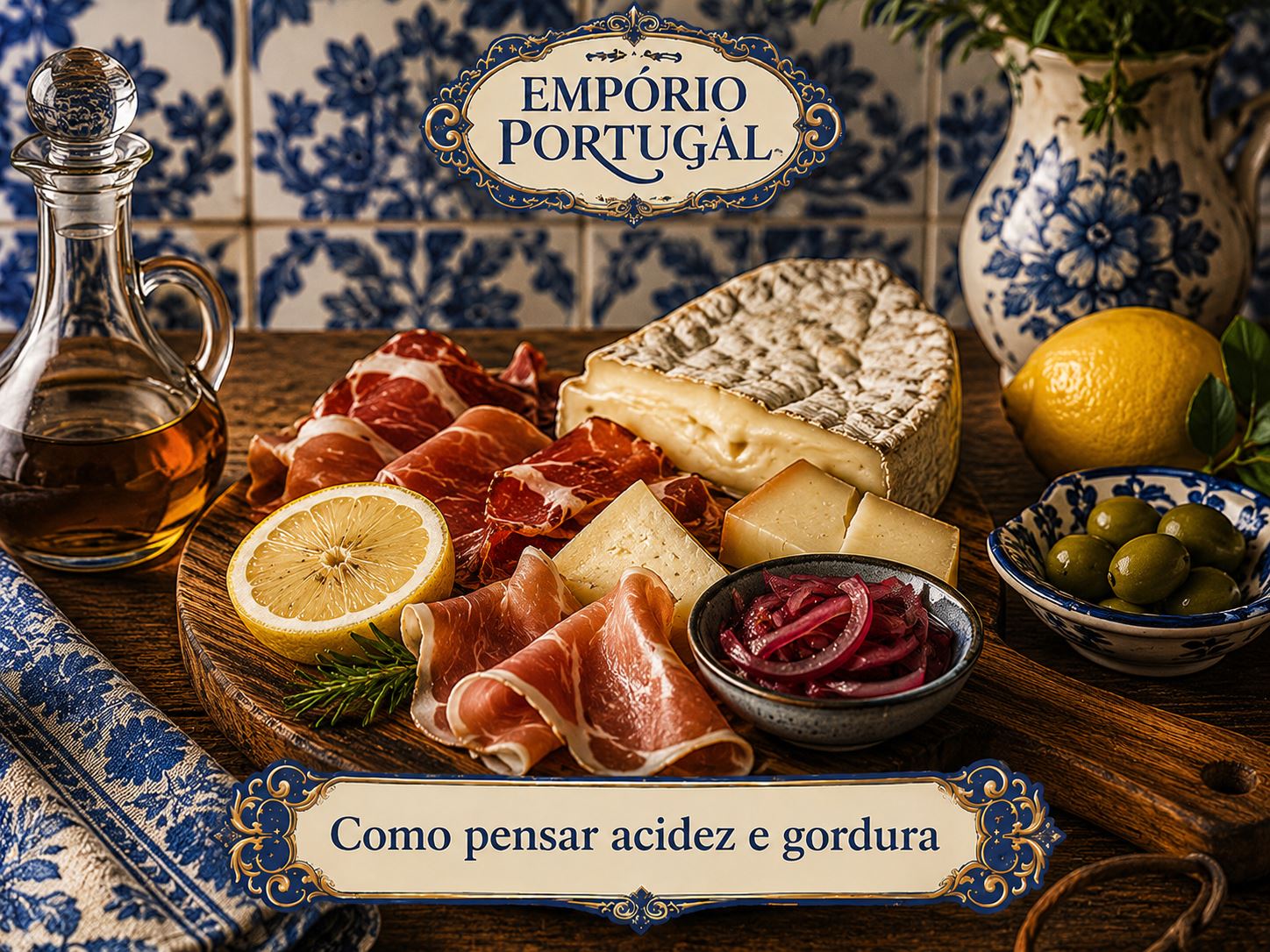
Thinking about the fat of the dish and the acidity of the wine simplifies choices beyond rigid regional rules.
Bacalhau com azeite, crispy suckling pig, and rich duck rice — rich Portuguese dishes call for wines with acidity or tannin to cleanse the palate. Pairing is not a fixed law: acidity, fat, texture, and intensity are practical references.
Map the dish — light, fatty, salty, or acidic — before choosing the wine profile.
Identify the source of fat in the dish. The wine tends to balance better when contrast (acidity or tannin) cleans the greasiness.
Note the acidity already present (lemon, vinegar). In fatty dishes, a good reference is to choose wine with equal or higher acidity.
Tannin can also help cleanse the palate in rich Portuguese dishes — it depends on the intensity of the dish.
Observe the salt in the dish. It is advisable to avoid very alcoholic wines with very salty food.
Too sweet tends to imbalance intense salty dishes. Dessert calls for different rules.
Delicate dishes call for medium-light body wines; rich dishes call for contrast. Texture also interferes.
Adjust the temperature of the wine — very cold white hides acidity and can mask the balance.
The acidity of the wine tends to cleanse the palate and contrast with fat — without being an absolute rule.
Rich Portuguese dishes call for wines with acidity (or tannin) to cleanse. The contrast with fat can bring a sense of lightness.
Note lemon or vinegar already present. For fatty dishes, wine with equal or higher acidity is a good practical reference.
Very cold white hides acidity. Serving all wines at the same temperature is a common mistake.
Wine without acidity with frying tends not to balance. It is worth testing with the first bite of the dish.
The greasiness of the dish changes what the wine needs to do on the palate.
Start with the source of fat — olive oil, crispy skin, rich sauces. This guides whether the contrast with acidity or tannin can work.
The wine can contrast fat (acidity/tannin) or complement delicacy (similar body). It depends on the intensity of the dish.
Always taste with a bite of the dish before the glass. Note the combinations that worked.
Sparkling water cleanses the palate between tastings and helps to perceive the greasiness and acidity again.
Practical steps based on the content of this guide — to test and adjust, not to fix laws.
Identify the source of fat in the dish.
Note salt and acidity already present (lemon, vinegar).
For fatty dishes, choose wine with equal or higher acidity. Delicate dishes call for medium-light body.
Avoid very alcoholic wines with very salty food.
Test the pairing with the first bite of the dish.
Adjust the temperature — very cold white hides acidity.
Note the combinations that worked.
Sparkling water between tastings helps to reassess.
Practical references — balance depends on the preparation and intensity of each table.
Dish rich in fat from olive oil. Acidity or tannin in the wine tends to cleanse the palate.
Fat and crunchiness call for contrast. Wine without acidity with frying tends not to balance.
Fatty dish cited in this guide — acidity or tannin can help cleanse between bites.
Only references already present in the content — no invented producers, labels, or vintages.
Light Verde with seafood — a good reference when the dish calls for freshness and lightness.
Full-bodied Alentejo with lamb — a reference of body when the dish is more intense.
Portuguese sparkling can open rich meals — worth testing at the beginning of the table.
Roasted poultry can pair with full-bodied white — not all meats call for only red.
Practical compasses from this guide — the result depends on intensity and texture.
Feeling: greasiness.
Balance: acidity or tannin.
Reason: cleanse the palate and contrast fat.
Feeling: lightness.
Balance: medium-light body.
Reason: complement delicacy without covering the dish.
Feeling: intense salt.
Balance: avoid very alcoholic wine; be careful with too sweet.
Reason: salt and high alcohol (or excessive sweetness) tend to imbalance.
Feeling: crunchy fat.
Balance: wine with acidity (or sour craft beer, when cited).
Reason: wine without acidity with frying tends not to balance.
Sweet calls for sweet wine or acidic contrast — different rules from salty dishes.
No — roasted poultry pairs with full-bodied white.
Yes — content for those over 18; drink in moderation.
Content about alcoholic beverages intended for those over 18. Drink in moderation, serve water, respect individual restrictions, and offer non-alcoholic alternatives.
Adjust ingredients and techniques according to allergies, dietary restrictions, proper preservation, and professional guidance when necessary.
This guide is part of the editorial curation of Empório Portugal. Culinary practices, pairing, and service may vary by region, family, and cook.
Send it to the Empório Portugal community. All content received undergoes review before any publication.
Share Empório Portugal with someone who enjoys Portuguese gastronomy and culture.