
Culture and gastronomy
Treating drink with maturity means talking about history, region, and gastronomy — without romanticizing irresponsible consumption.
Wine and tradition at the Portuguese table — information, moderation, and cultural respect.
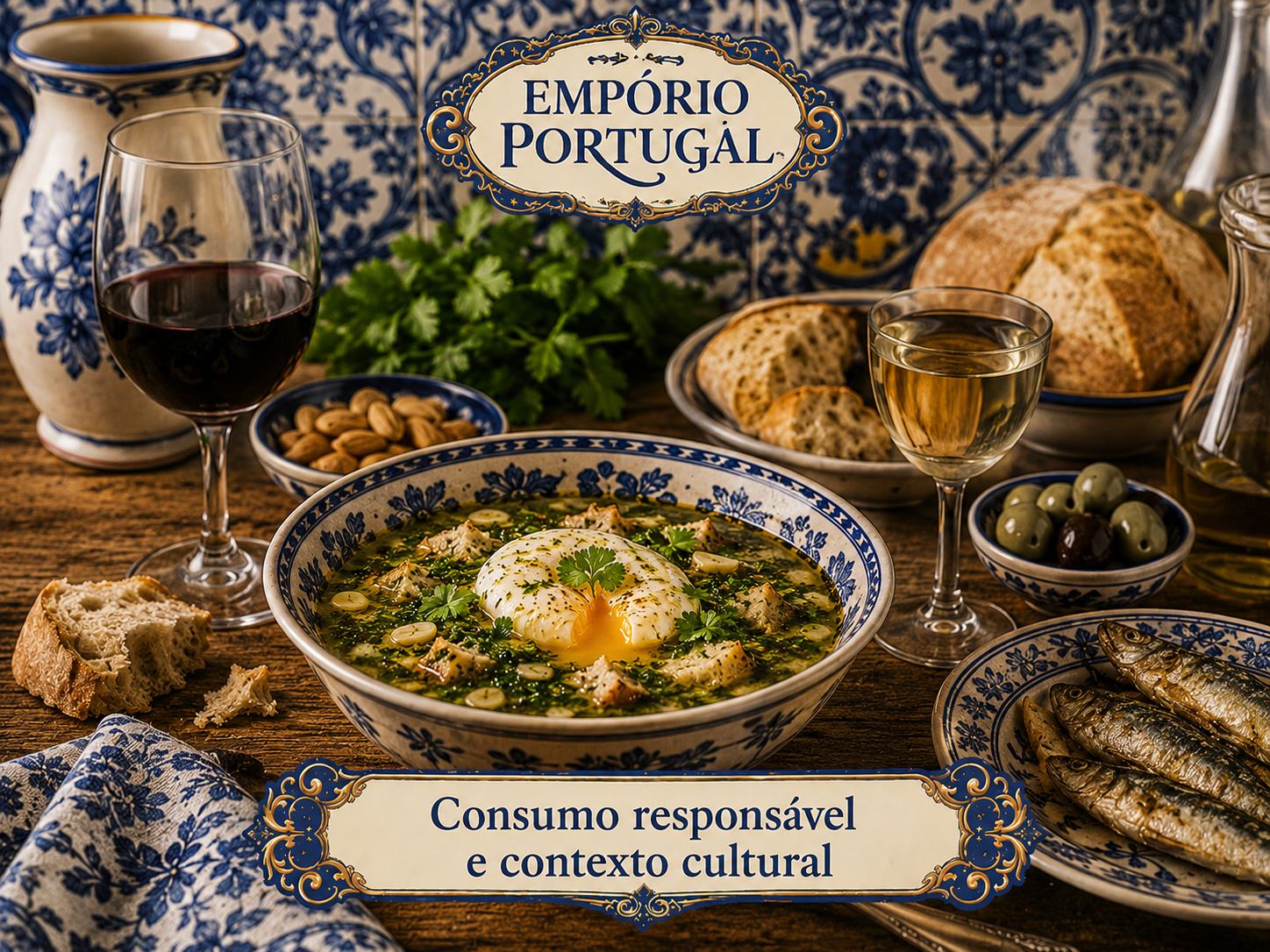
Wine is part of many Portuguese tables, but culture is not confused with excess.
Treating drink with maturity means talking about history, region, gastronomy, individual limits, and alcohol-free choices. Culture does not depend on excess. The editorial rule of Empório Portugal is simple: inform, contextualize, and never encourage excess.
Essential in 30 seconds — points already present in this guide.
Drink in moderation and always with food. Smaller glasses help with control.
Clear information about what is being served. Identify drinks with and without alcohol.
Plan the drink as part of the meal, not as the center of the night. Value history, aroma, and food more than quantity.
Never pressure guests to drink. Do not make refusal a topic of conversation.
A welcoming table allows each person to participate within their limits.
Offer water and alcohol-free options at the same table, with the same respect.
Wine content is for those over 18 years old. Confirm discreetly before serving.
Keep water visible on the table. Good hospitality respects limits and individual choices.
History, regions, dishes, and table rituals also exist without alcoholic consumption.
Treating drink with maturity means talking about history, region, and gastronomy — without romanticizing irresponsible consumption.
Associating tradition with excess is a common mistake. Culture does not justify excess and does not depend on it.
It is possible to talk about culture without drinking. History, regions, dishes, and table rituals also exist without alcohol.
Respect individual restrictions. Tradition does not replace professional guidance when necessary.
Editorial guidelines of this guide — do not replace medical, legal, or professional advice.
Serve alcoholic beverages alongside food. Always serve wine with food to moderate the pace and prolong the pleasure of the table.
Provide small portions. Smaller glasses help with control.
Always keep water visible on the table as responsible hospitality.
Never insist on a second glass or question those who prefer not to drink.
Points supported by this guide — without inventing medical or legal rules.
Content about wines is for those over 18 years old, with moderation guidance. Confirm discreetly if everyone can consume alcohol before serving.
Respect individual restrictions. When in doubt about health or other personal conditions, the person should follow professional guidance and applicable legislation — this guide does not replace that advice.
Offer choice and respect those who do not drink.
Include alcohol-free alternatives at the same table, treated with the same respect.
Keep water visible. Sparkling water is an option mentioned in this guide.
Offer lemonade, sparkling water, or iced tea as an elegant alternative.
Sparkling water, iced teas, lemonades, coffee, and alcohol-free interpretations of Portuguese flavors.
Step-by-step editorial guide of this guide.
Confirm that the content and service are intended for those over 18 years old.
Serve alcoholic beverages alongside food.
Keep water always visible.
Include alcohol-free alternatives at the same table.
Respect those who do not drink — without insistence.
Identify drinks with and without alcohol.
Smaller glasses help with control.
Value history, aroma, and food more than quantity.
For those over 18 years old, with moderation guidance.
Yes. History, regions, dishes, and table rituals also exist without alcoholic consumption.
Sparkling water, iced teas, lemonades, coffee, and alcohol-free interpretations of Portuguese flavors.
Content about alcoholic beverages intended for those over 18 years old. Drink in moderation, serve water, respect individual restrictions, and offer alcohol-free alternatives.
Adjust ingredients and techniques according to allergies, dietary restrictions, proper preservation, and professional guidance when necessary.
This guide is part of the editorial curation of Empório Portugal. Service practices, pairing, and cooking may vary according to region, family, available product, and cultural context. This content does not replace medical, legal, or professional guidance.
Do you have a recipe, family memory, or combination that works in your home? Send it to the Empório Portugal community.
Share Empório Portugal with someone who enjoys Portuguese gastronomy and culture.