
Freshness and Salinity
Vinho Verde tends to combine with freshness and salinity — a good practical reference, not an absolute rule.
How Vinho Verde enters the table and pot of Minho — pairings, sautés, and regional tradition.
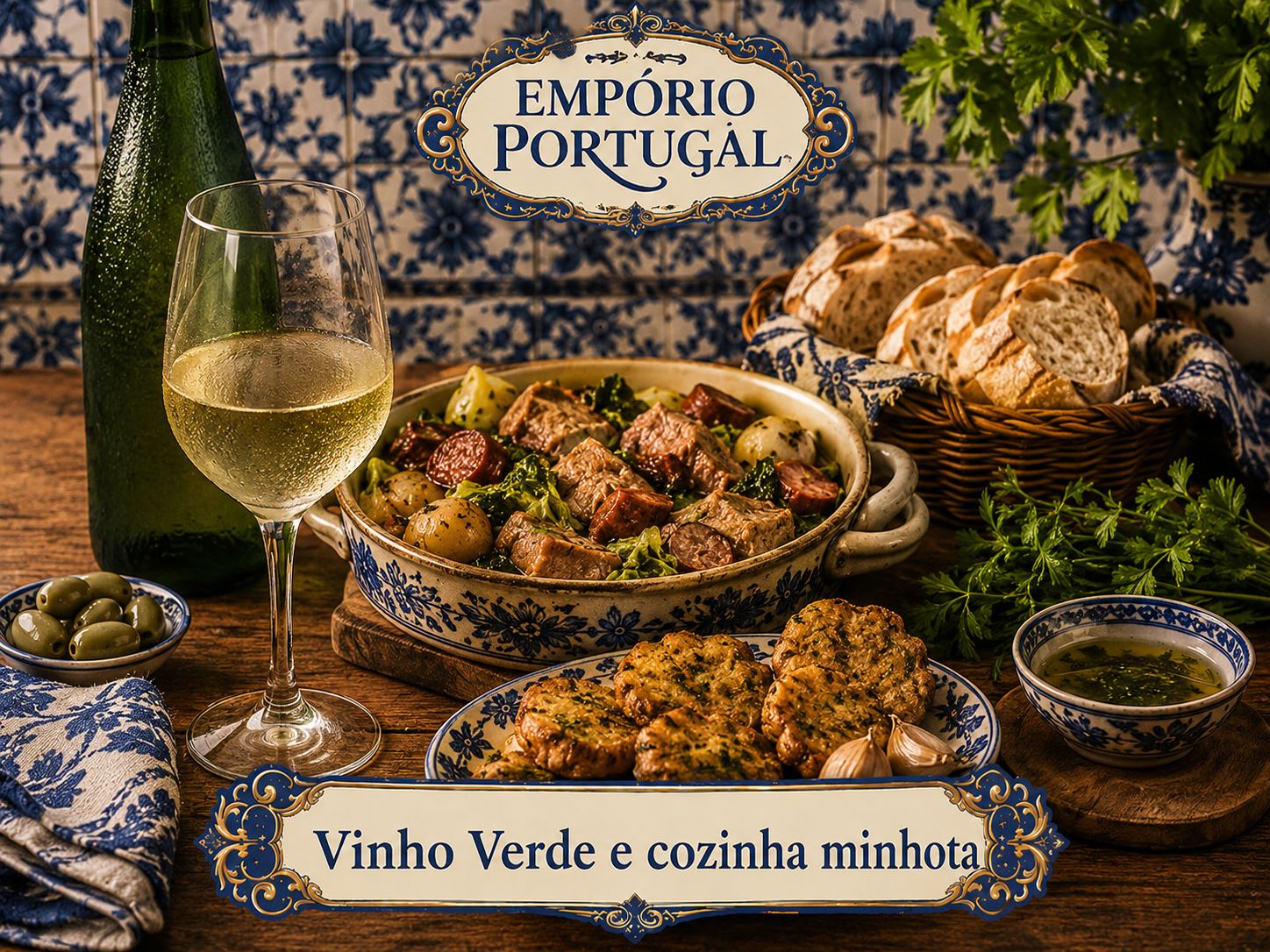
Minho cuisine is generous, marked by caldo verde, cod, meats, broa, potatoes, olive oil, and direct flavors.
Vinho Verde is born in this table environment, as a fresh counterpoint to salt, fat, and texture. In Minho, freshness and table food converse naturally — and the Minho table values food, water, and conversation.
Essential in 30 seconds — elements already mentioned in this guide.
A hallmark of the Minho table. Accepts light and moderate service; works best with simple service.
Cod à minhota requires acidity. Olive oil, potatoes, and salt tend to balance better with freshness.
Pork dishes require greater structure. Intense meats may call for a different style of wine.
Fish and appetizers tend to accept lightness. White Vinho Verde is a good reference for fish and light cod.
Broa and cheeses require care with salt. Potatoes and olive oil enter into the balance of salt and fat.
Acidity helps cleanse the palate when there is olive oil, light frying, potatoes, and salinity.
Think of Vinho Verde as a tool for freshness, not just as an aperitif. Not every Minho dish calls for the same wine.
The most beautiful combination respects Minho food and does not turn wine into an absolute protagonist.
Do not treat Vinho Verde as a single profile — the choice depends on the intensity of the dish.
Vinho Verde tends to combine with freshness and salinity — a good practical reference, not an absolute rule.
Acidity can help cleanse the palate when there is olive oil, light frying, potatoes, and salinity.
Born in the Minho table environment as a fresh counterpoint to salt, fat, and texture.
Serve fresh and in moderate portions. This guide suggests serving between 8 and 10 °C in doses of 90 to 120 ml to maintain freshness — adjust according to the table context.
Observe whether the dish is light, salty, or fatty — caldo verde, cod à minhota, and rojões require different intensities.
Fish and appetizers tend to accept lightness. White Vinho Verde is a good reference for fish, light cod, and appetizers.
Alvarinho and Loureiro, mentioned in this guide, tend to cut through olive oil and salt from seafood and light appetizers.
Look for more structure for meats and intense dishes. Heavily bodied dishes may call for young red or reserve the Verde for the appetizer.
Practical references from this guide — worth experimenting according to the dish and wine style.
Tends to benefit from acidity. Cod, olive oil, and potatoes require freshness — especially when acidity balances olive oil, potatoes, and salt.
Accepts light and moderate service. Works best with simple service.
Rojões and pork dishes require different intensities — generally, greater structure. Very strong dishes may call for a different style.
White Vinho Verde can accompany fish, light cod, and appetizers. Alvarinho and Loureiro tend to cut through olive oil and salt.
Broa and cheeses require care with salt — the intensity of the accompaniment also interferes.
Can serve for lighter dishes, but intense meats require more structure. Avoid light Vinho Verde with very heavy dishes.
Editorial checklist of this guide — hospitality with food, water, and conversation.
Observe whether the dish is light, salty, or fatty.
White for fish and appetizers; more structure for intense meats.
Serve fresh and in moderate portions.
Include water and a non-alcoholic alternative (water, grape juice, or sparkling water, lemon, and herbs).
Yes, especially when the acidity balances olive oil, potatoes, and salt.
Can serve for lighter dishes, but intense meats require more structure.
Sparkling water, lemon, and herbs maintain freshness without alcohol. Also include water and grape juice for those who prefer not to drink wine.
Content about alcoholic beverages intended for those over 18 years old. Drink in moderation, serve water, respect individual restrictions, and offer non-alcoholic alternatives.
Adjust ingredients and techniques according to allergies, dietary restrictions, proper preservation, and professional guidance when necessary.
This guide is part of the editorial curation of Empório Portugal. Service practices, pairing, and cooking may vary according to region, family, available product, and cultural context.
Do you have a recipe, family memory, or combination that works in your home? Send it to the Empório Portugal community.
Share Empório Portugal with someone who enjoys Portuguese gastronomy and culture.