
Essential techniques
How to choose cod
Appearance, cuts, thickness, smell, and salt: what to observe to buy cod with the confidence of someone who truly cooks Portugal.
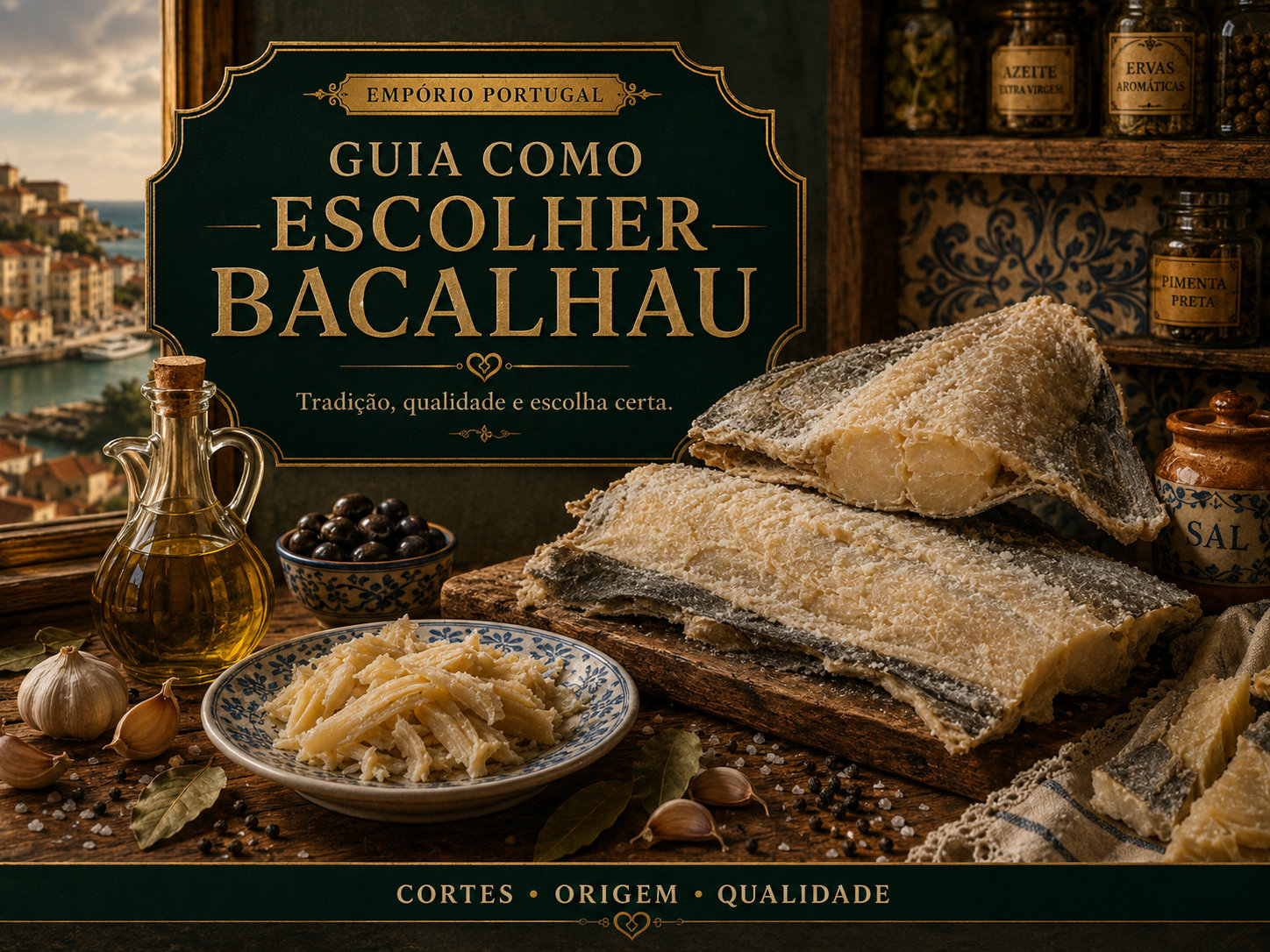
The essentials in 30 seconds
- Choose the cut based on the recipe, not the other way around.
- In general, firm pieces, dry to the touch, and of uniform color tend to indicate good curing — observe the set of signs.
- Thick fillets usually work well in the oven and stews; flakes, in creamy dishes.
- The aroma is usually that of clean salted fish; aggressive or unpleasant odors require caution.
- Check origin, preservation, and packaging before paying.
Before the purchase
What to observe before buying
In Portugal, choosing cod is almost a ritual. Before any seasoning, there is a careful look at the piece: the color, the thickness, the way the fibers present themselves. It is a gesture of respect for the ingredient that has crossed generations and accompanies dishes like lagareiro, Gomes de Sá, and pastéis. The appropriate cut depends on the recipe. A single sign does not determine quality alone — observe the whole: appearance, texture, aroma, salt, moisture, packaging, and origin.
Appearance
Look for uniform straw color, without dark or reddish spots. A dry surface is characteristic of well-cured fish — do not confuse it with dehydration.
Texture
Defined and firm fibers usually indicate good curing. A slight flexibility may suggest balanced curing; excessive rigidity or sticky moisture require caution.
Thickness
Observe the thickness in the context of the recipe. Thicker or thinner pieces serve different uses — the preparation helps to decide, more than an isolated rule of “the thicker, the better”.
Smell and aroma
The aroma is usually clean, of salted fish. A strong ammoniac or sour odor may indicate poor preservation — when in doubt, prefer another piece.
Salt
The layer of salt tends to be white and dry. Damp or yellowed salt suggests inadequate storage.
Moisture
Do not confuse excess moisture with freshness. Very moist or sticky pieces deserve extra attention.
Packaging
Check the integrity of the packaging and the date indicated on the label before paying.
Origin
Check the origin declared on the label and other identification information available on the product.
Cuts
Main cuts of cod
Knowing the cuts helps to buy what the recipe really needs, reducing waste and frustrating results.
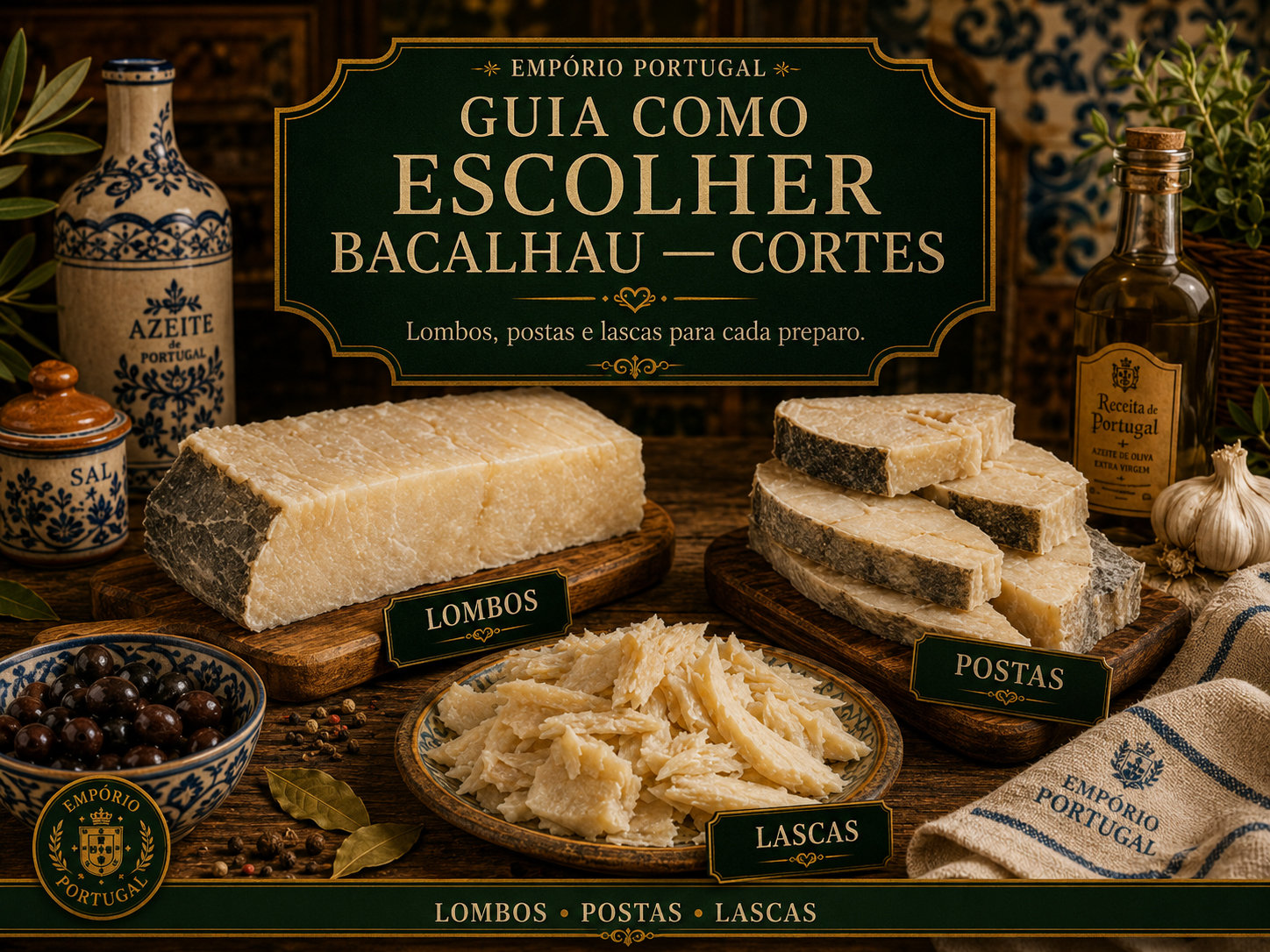
The best cut depends on the recipe. Use this quick reference:
- Thick fillet (loin) — a good option for oven, grill, and stews (Lagareiro, Gomes de Sá, Portuguese stew).
- Flakes — suitable for shredded and creamy dishes (Brás, cream, spiritual).
- Trimmings and scraps — useful in fillings and snacks (pastries, fritters, rice).
The image highlights loins, fillets, and flakes; combine visual reading with the intended use in the recipe.
By recipe
Which cut to choose for each preparation
If you already know what you are going to cook, the choice becomes simpler: thick fillet usually serves well for oven dishes that require presentation; flakes work in creamy and shredded dishes; trimmings are used in snacks and fillings. Letting the recipe guide the purchase helps to get it right more often.
Oven and presentation
Thick fillet (loin) is a good option for lagareiro, Gomes de Sá, and preparations where the piece appears whole.
Creamy and shredded
Flakes usually work well in Brás, cod with cream, and similar dishes.
Snacks and fillings
Trimmings and scraps are suitable for pastries, fritters, and cod rice with good utilization.
Label
Packaging and label information
Before paying, carefully check the information available on the packaging. In general, it is worth observing product identification, weight, origin, batch, expiration date, storage conditions, and the responsible party for marketing. To deepen your reading of labels of Portuguese products, see the dedicated guide.
How to read labels of Portuguese products — identification, weight, origin, batch, expiration, preservation, and responsible party.
Buy in advance
A good cod deserves time for desalting, without rush, to reveal texture and flavor. Plan the purchase in advance — desalting takes time and varies according to the piece and method. For the step-by-step, consult the guide How to desalinate cod.
Attention
Common mistakes in buying
Buying only by price
Choosing only by value, without thinking about the use in the kitchen, can lead to a piece unsuitable for the recipe.
Confusing moisture with freshness
Excess moisture is not, by itself, a sign of quality — observe the set of signs.
Wrong cut for the recipe
Using trimmings in a recipe that calls for a whole fillet usually frustrates the expected result.
Ignoring origin and packaging
Failing to check origin and packaging date reduces the safety of the choice.
Common questions
Frequently asked questions
Is thick fillet always better?
Not necessarily. It is usually a good option for oven and stews, but shredded and creamy dishes accept flakes with excellent results.
Should cod have a strong smell?
The aroma is usually that of clean salted fish. An aggressive or unpleasant odor requires caution — prefer another piece when in doubt.
Can I buy already desalinated?
You can, as long as it is well refrigerated and with clear provenance. Check preservation and expiration on the label.
Adjust ingredients and techniques according to dietary restrictions, allergens, proper preservation, and professional guidance when necessary.
This guide is part of the editorial curation of Empório Portugal, created to help readers better understand Portuguese cuisine, its ingredients, techniques, and traditions. Culinary practices may vary by region, family, and cook.
Keep exploring
Continue through Portuguese cuisine
Did you choose the right piece? Now cook Portugal.
Discover classic cod recipes and bring to the table the result of your good choice.